‘Speculative Demolition’ is the calculated action of demolishing buildings in the hopes that a vacant lot will eventually become more valuable than one with a building on it. Many architecturally and historically important buildings have been destroyed, but seldom have they been replaced with anything that is as attractive, or as rooted in the community, as that which was destroyed based solely on financial speculation.

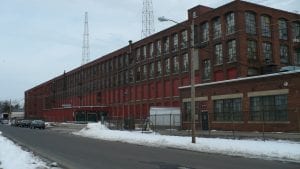 The creation of the Hampden railroad line from Springfield to Athol helped spur industrial development in East Springfield in the early 20th century. A large complex for the Westinghouse Company grew along Page Boulevard. It was demolished for a “big box” retail development which never occurred.
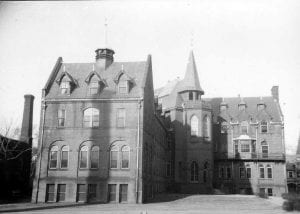 The Gothic Revival structure housed the Sisters of Saint Joseph who taught at Cathedral High School. When the Sisters were moved, efforts were made to convince the Roman Catholic Bishop that the building could be used for elderly congregant living. The structure was instead demolished. The Preservation Trust sued to prevent demolition but the case was lost on a technicality.
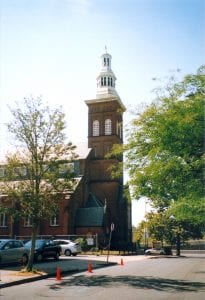 For more than 100 years, the Romanesque Revival style church served the City’s French-Canadian population. It was closed in the early 21st century. The Diocese of Springfield sold the church parking lot and then a year later, the church. The new owner demolished the church for a strip commercial project.